
Every football supporter has a retro T-shirt they remember more clearly than some match results. Maybe it was the one a favourite striker wore when he scored a late winner, or the one a cousin brought home from abroad and refused to lend. Kits stay in our memory because they were part of the moment itself. The seven designs below earned lasting reputations through bold colours, memorable sponsors and the stories stitched around them. Fans still bring them up in group chats, stadium queues and late-night debates, and the reasons become obvious once you look a little closer.
1. Manchester United 1998–99 Home
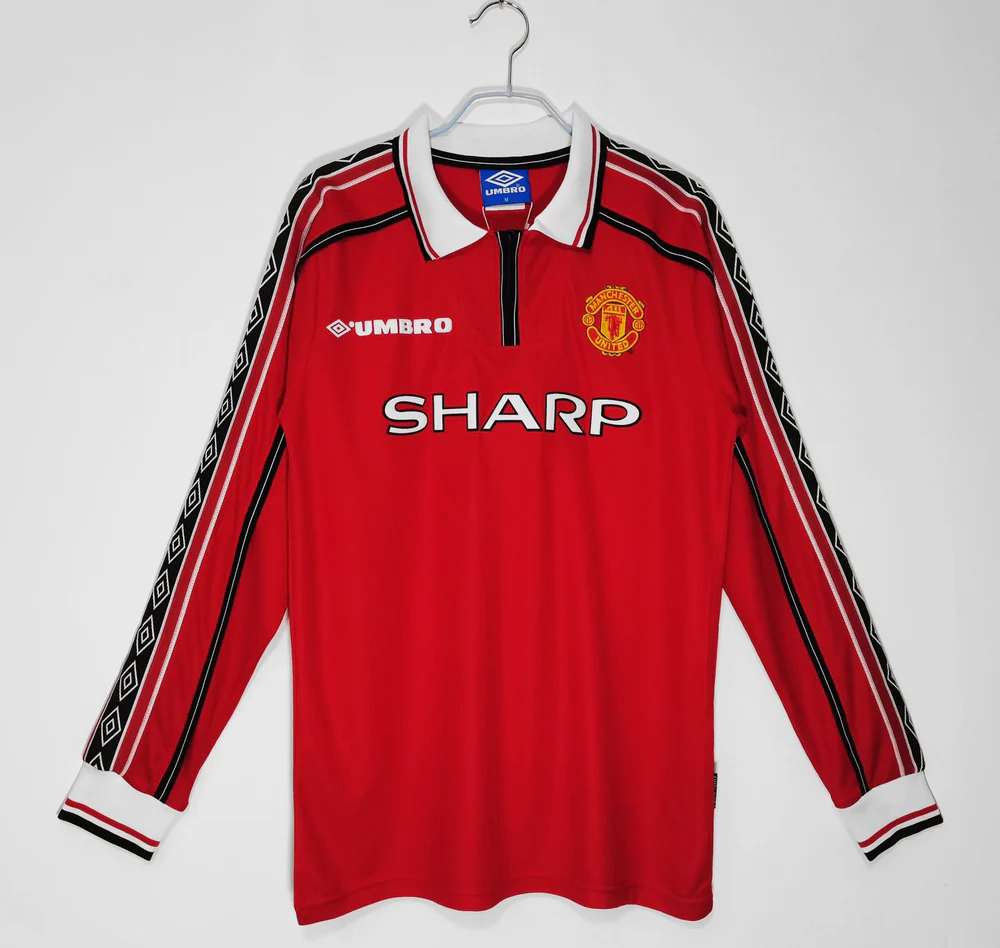
Few t-shirts carry as much weight as the red United top from the treble season. The design was simple, with a clean red body, black and white trim and the Sharp logo across the chest, yet it became inseparable from Beckham’s number seven and the run to the 1999 Champions League final. For many supporters, this is the retro shirt football lovers point to first when they explain why older kits feel more meaningful than modern ones.
Two goals in stoppage time at the Camp Nou completed the treble and turned the kit into sporting folklore. Its understated look has also helped it age well, because it works as easily with jeans on a weekend as it did on a matchday in Manchester.
2. France 1998 Home
France hosted the 1998 World Cup and won it, and the blue T-shirt they wore has been admired ever since. Adidas added tricolour touches around the collar and sleeves, and the cockerel crest sat proudly over the heart. Nothing about the design was loud, yet it looked calm, confident and unmistakably French.
Zidane’s two headers in the final against Brazil turned the kit into a symbol of a country celebrating together. Even today, a slightly faded copy can start a conversation between fans who support completely different clubs, which says a lot about how widely this design is respected.
3. Brazil 1998 Home
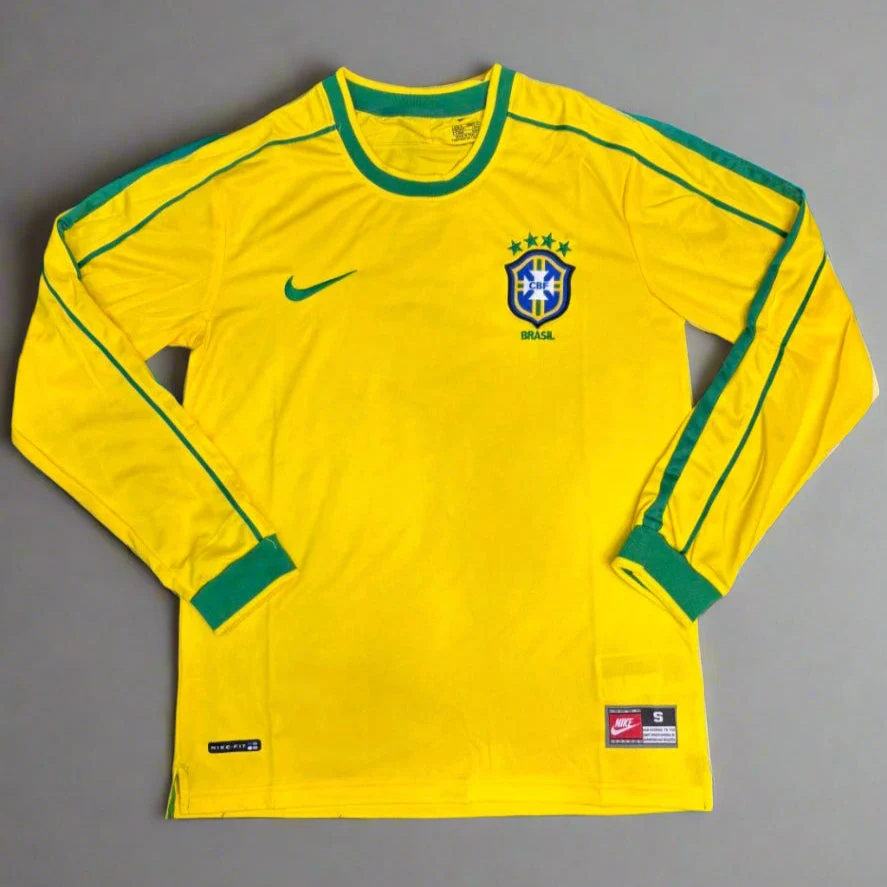
Brazil’s yellow t-shirt is always special, but the 1998 version made by Nike felt sharper and more modern than many earlier ones. A green collar and a streamlined cut framed a squad that included Ronaldo, Rivaldo, Cafu and Roberto Carlos, a group that made attacking football look effortless.
Brazil lost the final to France, yet that result has only added to the t-shirt’s mystique. Fans remember the flair of the tournament and the drama surrounding Ronaldo before the final, and the kit carries all of those emotions. It remains proof that a design can be loved even when the ending was not perfect.
4. Real Madrid 1998–2000 Home
White t-shirts rarely look dull at the Bernabéu, but this one captured a particularly joyful period. Madrid won the Champions League in 1998 after a wait of more than thirty years, then lifted it again in 2000 with a convincing win over Valencia in Paris. The t-shirt, with its neat collar and bold sponsor print, sat at the centre of both triumphs.
Collectors enjoy it because it reflects the moment football fashion was moving into a new century, balancing tradition with a slightly sleeker look. Wearing it today feels like a quiet nod to one of the most successful chapters in the club’s history.
5. AC Milan 2006–07 Home
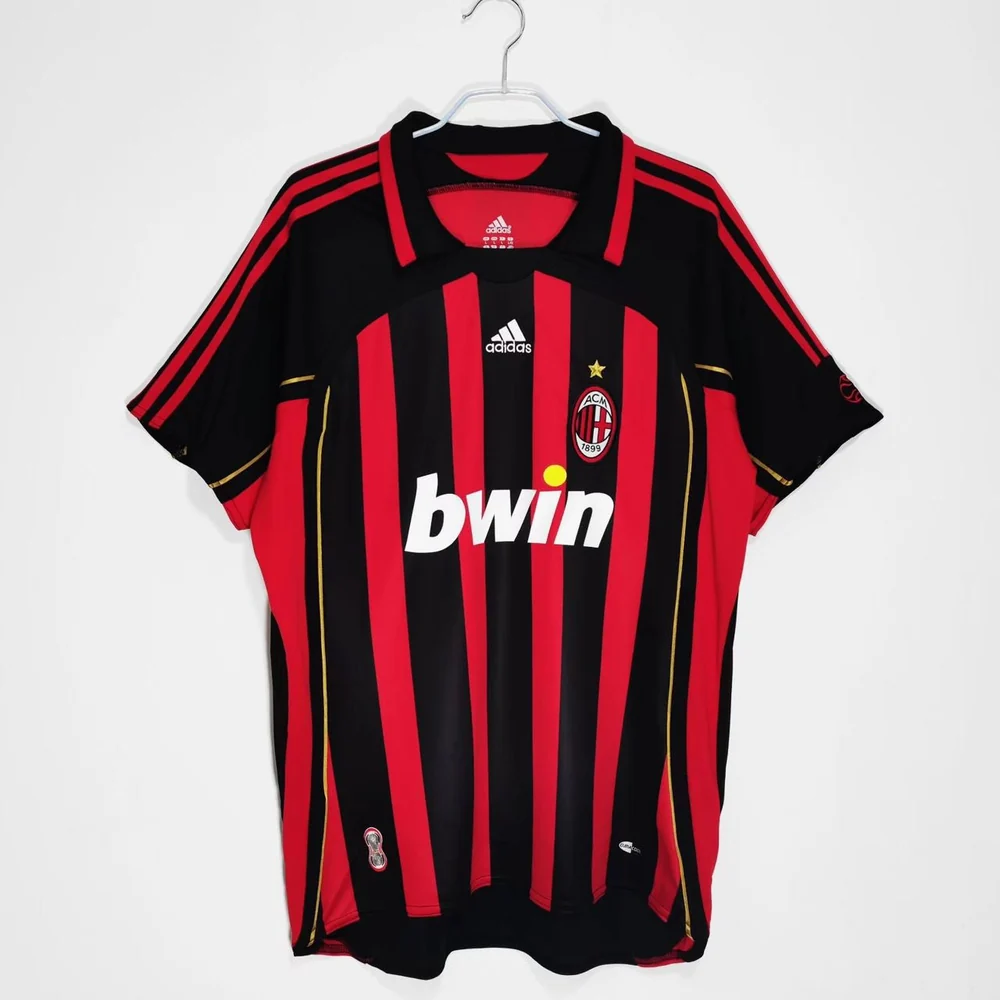
Milan’s red and black stripes have long been among the most recognisable patterns in the sport, and the 2006–07 version by Adidas is especially admired. A star above the badge marked the club’s league success, and the stripes were cut with a precision that made the T-shirt look elegant on the pitch and in the stands.
This was the season Milan beat Liverpool in the Athens final, with Inzaghi scoring twice, to settle the score from Istanbul two years earlier. Kaká also collected the Ballon d’Or that year, so the t-shirt is permanently linked with grace, composure and a team at the height of its powers.
6. Liverpool 1993–95 Carlsberg Away
Not every cherished kit comes from a trophy-winning team. Liverpool’s Carlsberg-sponsored away t-shirt belongs to the early Premier League years, when sponsor logos were large, collars were wide and designers experimented freely with colour. Players such as Robbie Fowler and Steve McManaman wore it during a transitional time at Anfield.
Fans love it for personality rather than silverware. It reminds them of a less polished, more unpredictable era of English football, and it appeals to people who prefer a distinctive and slightly quirky look over something safe. That honesty is a big part of why it keeps resurfacing in conversations.
7. England 1998 Home
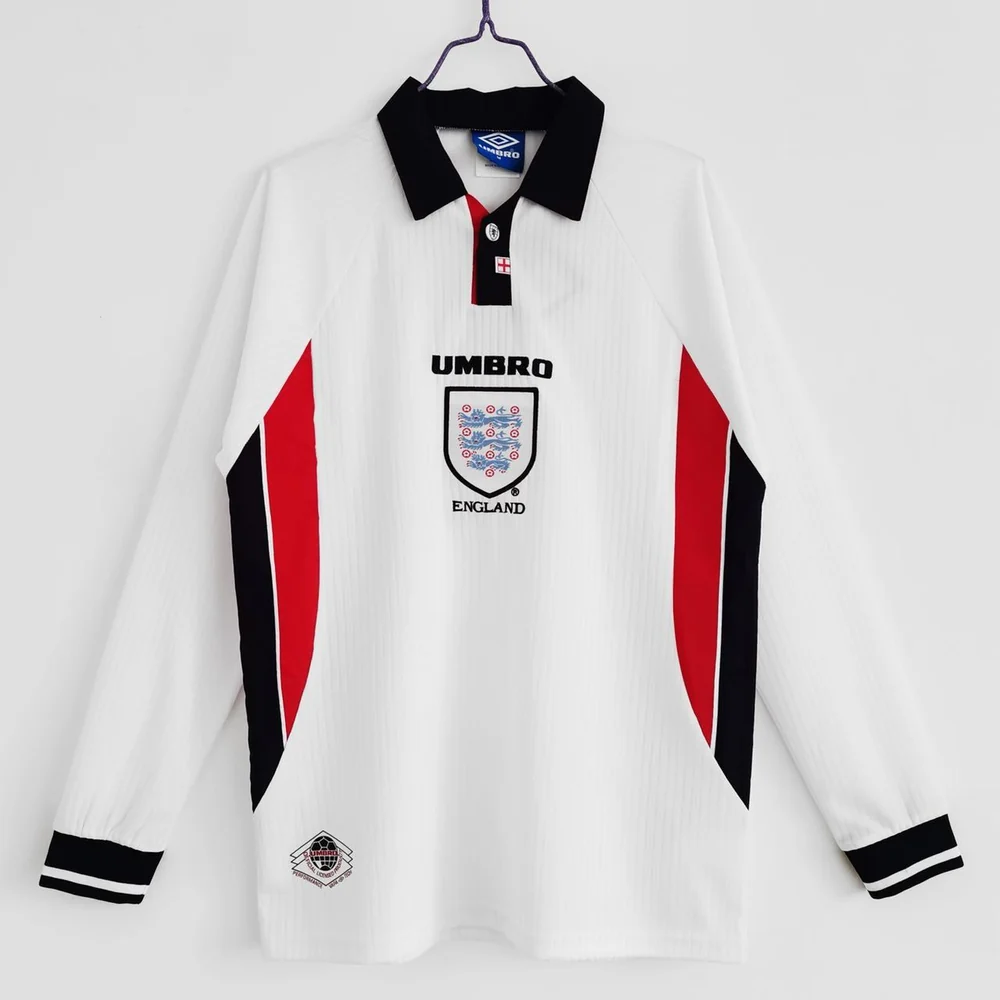
England’s white Umbro t-shirt from France 1998 holds memories of both excitement and heartbreak. Michael Owen’s thrilling solo goal against Argentina, David Beckham’s red card and the painful penalty shootout all happened while this kit was on the pitch.
Despite the result, supporters remain fond of the design, with its simple lines and the Three Lions crest standing out clearly. It shows how a t-shirt can be loved for the feelings attached to it rather than for what the scoreboard said, which is exactly why it still gets mentioned whenever old World Cup stories are shared.
Why Retro T-shirt Designs Still Matter
Looking back at these seven t-shirts, a pattern appears. None of them became famous only because of how they looked. Each one was worn during a story people care about, whether it ended in celebration, disappointment or something in between. That mix of colour, context and memory is what separates a passing kit from a lasting one.
Modern designs will get their own nostalgia in time, but these classics set a high standard. If a certain T-shirt from your own childhood still comes to mind instantly, you already understand why fans keep talking about them.